
Pinal County Previous Resident Eras
Previous residents appear in different records as time moves backward. Current land systems create the ownership spine. Older deeds, directories, census schedules, maps, permits, newspapers, probate files, and local collections add the household layer. Pinal County has no continuous countywide reverse directory, so the best starting source depends on the date and community.
| Source | Years or span | Where held | What it can show |
|---|---|---|---|
| Recorder web index | May 23, 1980 to present | Pinal County Recorder | Ownership instruments and linked legal descriptions |
| Recorder office indexes | Before web coverage; exact start not verified | Recorder, microfilm, archives | Older deed books and name indexes |
| Public federal census | Through 1950 | NARA and library databases | Household and nearby residents at ten-year points |
| Telephone and city directories | Title and year specific | Libraries, archives, museum contacts | Subscriber or occupant between census years |
| Sanborn maps | Town and sheet specific | Library of Congress and libraries | Building footprint, use, materials, and old numbering |
| Parcel and permit files | Current or jurisdiction specific | Assessor, city, or Pinal County office | Year-built clue, work dates, and applicants |
| Obituary and probate trail | Event and file specific | Newspaper archive and Pinal Clerk | Deaths, survivors, heirs, and estate action |
For recent address history, start with the parcel and deed. For the mid-twentieth century, pair known telephone books or Polk editions with the public census. For early Pinal County, use Great Registers, tax and school census material, newspapers, and territorial records alongside land instruments.
Reverse Pinal County Resident Deeds
A deed chain follows ownership, not all previous residents. Still, it gives a stable framework for every later household clue. Begin with the Pinal County Assessor Parcel Search. Record the parcel number, current listed owner, site address, legal description, subdivision, sale details, and reception number. The legal description matters most when postal names, street numbers, or parcel identifiers have changed.
- Find the current purchase instrument in the Recorder Document Search by reception number, owner, or date.
- Record the grantor, grantee, recording date, instrument type, fee number, and legal description.
- Search the seller as a grantee to find when that party acquired the same land.
- Repeat backward. Match the legal description each time, since names recur and parcel numbers can split or combine.
- When the online trail ends, give Recorder staff the last known party, date, book or page, fee number, and land description.
Do not assume every transfer is a standard sale. A trustee's deed, beneficiary deed, quitclaim, probate distribution, merger, or entity transfer can change the indexed path. A deed of trust secures an obligation and does not itself prove a sale.
- Grantor and grantee
- The grantor transfers an interest; the grantee receives it.
- Chain of title
- The linked sequence of recorded transfers affecting the same land.
- Legal description
- The formal land description used to follow a parcel through address or ZIP changes.
- Reception or fee number
- The Recorder's permanent reference for a filed instrument.
Pinal County Past Resident Records
The online Recorder trail starts on the exact date May 23, 1980. That date is not the beginning of Pinal County land records. It is the web-image boundary. Accepted instruments are indexed, optically scanned for public viewing, and microfilmed for archival needs. Web images carry an unofficial-copy watermark, while the underlying recorded instrument remains an official filing.
Copies cost $1 per page, with $3 added for certification of a document. Email, mail, and counter requests are available. The Recorder's main office is at 31 N Pinal Street, Building E, Florence, with satellite service in Apache Junction, Casa Grande, Maricopa, and San Tan Valley. Verify hours before a trip. For a pre-cutoff search, the strongest request names a party, a narrow date span, the legal description, and any cited book, page, or fee number.
Note: An online cutoff is a change in access channel, not evidence that an older deed or previous resident record was lost.
Pair Pinal County Past Households
Owners are only half the address story. A reverse directory can name a subscriber or occupant. A census can show the full household and nearby homes. A newspaper may tie a social notice or obituary to the place. These sources are dated snapshots, so pairing them is more reliable than projecting one entry across a long span.
- Fix the address spelling and number for the year under study. Check both old and new postal forms when needed.
- Search the closest available directory by surname and, where present, by reverse street entry.
- Move one issue backward and forward. Record names, spouse notation, address, and any change.
- Match the nearest public census year by place or enumeration district, then compare the full household.
- Use newspapers, historical vital images, probate, and deeds to explain a move, death, inheritance, or name change.
An enumeration district is a census taker's assigned area. A criss-cross directory is arranged by street and house number. Both help when a surname is unknown. The Pinal County city directory page covers the confirmed editions and telephone-book runs in detail.
Date Pinal County Address History
Permits and maps can show when the site changed even when they do not identify each person. The Assessor parcel service includes a structure year and other characteristics. A city permit or Pinal County Community Development file may add applicant, contractor, work, and inspection dates. First confirm whether the parcel lies inside an incorporated municipality, an unincorporated community, or tribal land. The postal place alone is not enough.
The Library of Congress Sanborn collection can help with town-specific historic sheets for places such as Casa Grande, Florence, or Superior, subject to catalog coverage. Sanborn maps show building outlines, use, materials, and street numbering, not resident names. A changed footprint can explain why one address later became several, while a recorded plat or legal description confirms the land.
Pinal County Previous Address Codes
On July 1, 2009, USPS moved several local ZIP codes from the 852 series to the 851 series. That shift affected codes serving areas such as Queen Creek, San Tan Valley, Red Rock, Stanfield, and Superior. A cached listing or scanned directory can therefore show an old code for the same road and property.
When searching previous residents, try both postal forms in OCR and name indexes. Keep the legal description as the anchor. A postal city may also cross a county or municipal line. Queen Creek, Tucson, Laveen, Hayden, and Winkelman labels are mail routes, not certain statements of local jurisdiction.
Pinal County Resident Record Room
Pinal County was organized in 1875, with Florence as county seat. The first Florence courthouse was built in 1877 and 1878. In 1882, one of its offices became a records archive room. The building stopped serving as the courthouse in 1891 and survives as McFarland State Historic Park. The restored 1891 courthouse also remains part of Pinal County's civic landscape.
This continuity is the honest local record story. No authoritative courthouse fire or flood loss was found. Series begin at different dates instead: Great Registers survive from 1876, selected birth and death books begin in the late nineteenth century, and court series have their own spans. An early address project may also reach into Maricopa, Pima, or Gila County material because Pinal's boundaries changed after organization.
End Pinal County Resident Trails
An obituary can connect a deceased past resident to relatives, a new place, or a cemetery. A public probate file can identify a personal representative, heirs, devisees, and property action, although probate is omitted from the statewide public case portal. Ask the Pinal County Clerk of the Superior Court for the actual file and respect any sealed or restricted material.
The Arizona Department of Revenue unclaimed-property search is a free official lead for an owner or heir.
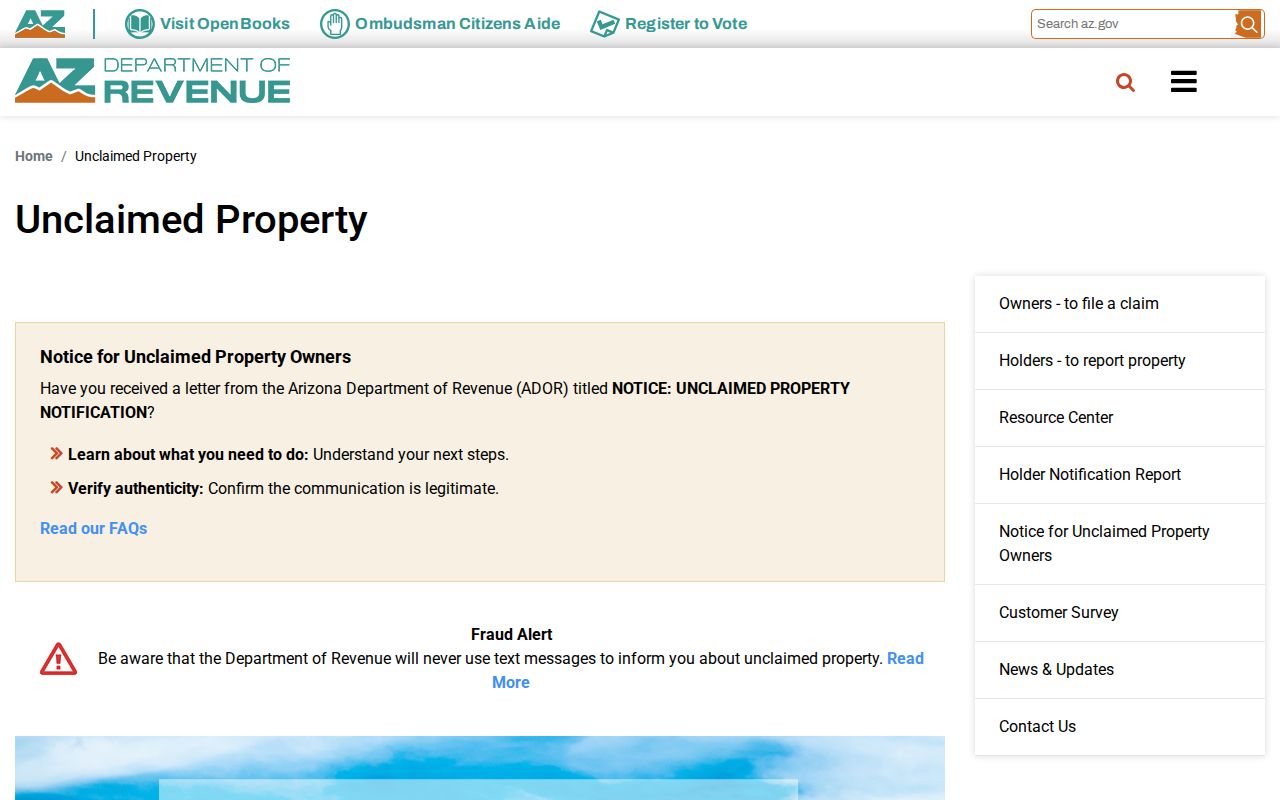
A possible match does not disclose full value or prove authority to claim, but it can point a family-history trail toward the proper estate records.
Federal Clues for Pinal Residents
Some address disputes, bankruptcy-linked property matters, or federal cases can surface a dated party or land clue outside Pinal County files. The U.S. District Court for the District of Arizona is the official court source, while PACER supplies federal docket and document access through an account. A federal filing should be checked against the Pinal parcel and deed chain before it is tied to one address.
The District of Arizona site appears in the captured image below.
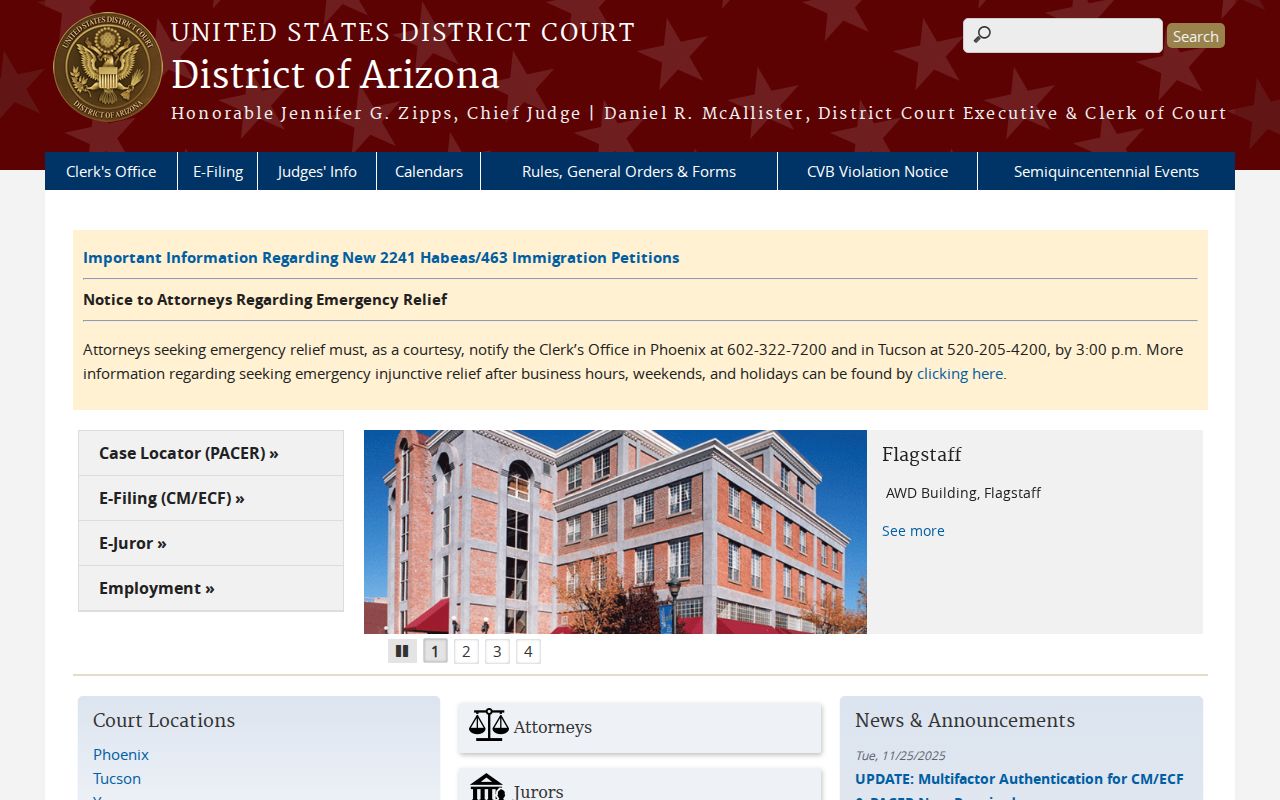
This channel is a narrow fallback, not a house roster. The Pinal County Recorder and Assessor remain the first sources for land identity.
Pinal County Previous Resident Limits
Past residents can vanish from a source without leaving Pinal County. A directory may skip a year, a phone subscriber may be unlisted, a rural place may lack street delivery, and OCR may miss a compound surname or initial. Land records omit most nonowners. A Sanborn sheet dates a building, not a family. One absence is never proof that a person did not live at the address.
Protected or sealed information must remain closed. Arizona's Address Confidentiality Program and related procedures can hide an address for an eligible person. Modern voter data has strict use limits, and the self-service portal is not a past-resident roll.
Lawful use. Research previous residents for family history, property history, heirs, or civic study. Never use an address trail to stalk, harass, threaten, or track a living person.